

Appel à communications
Croisements culturels franco-autochtones (XVIe-XVIIIe siècles)
Journée d’étude
Organisée dans le cadre des travaux de la Chaire de recherche sur les rapports franco-autochtones dans les Amériques de l’Université York
Montréal
Vendredi 22 mai 2026
(English version follows)
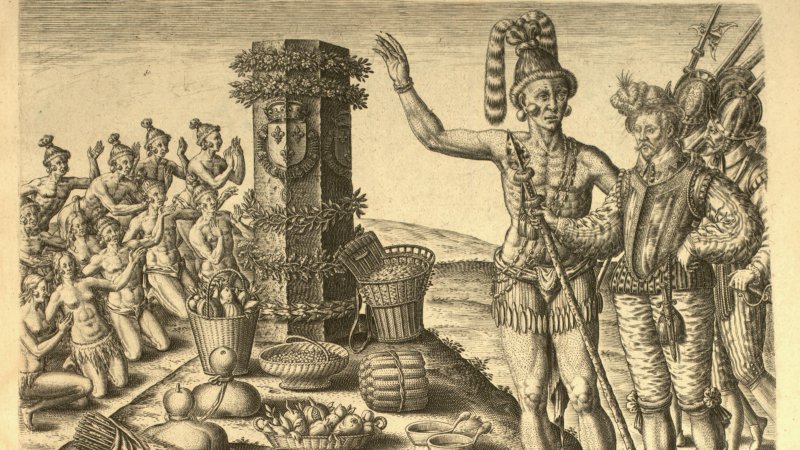
L’histoire des rapports franco-autochtones entre 1534 et 1763 est marquée par une dynamique complexe d’échanges culturels, de transferts de savoirs et de reconfigurations identitaires. Sous le Régime Français, les pratiques d’imitation, d’adaptation et d’appropriation ont joué un rôle central dans les interactions entre Autochtones et Européens, mais aussi dans les relations intra-européennes et entre les différentes communautés des Premières Nations.
Ces métissages peuvent être envisagés comme des stratégies de survie ou d’intégration. Ils se manifestent dans les domaines linguistique, religieux, artistique, juridique et politique, ainsi que dans diverses pratiques quotidiennes. Loin d’être prisonnières de la dialectique imitation/résistance, les sociétés autochtones témoignent d’une capacité d’innovation et de réappropriation créative des coutumes du visiteur. Dans le contexte de la colonisation, l’imitation n’est pas nécessairement synonyme d’adhésion culturelle, mais peut relever d’une stratégie pragmatique de survie ou d’adaptation, afin de faciliter les échanges commerciaux ou de renforcer des alliances diplomatiques. Si l’imitation pouvait aussi être imposée par les autorités coloniales, dans une logique de conversion ou d’assimilation, les Autochtones ont parfois retourné cette logique à leur avantage, en adoptant certains codes européens pour mieux les détourner. Ainsi, la mimiquerie des manières et de l’habillement des Européens tourne parfois chez les premiers peuples à la dérision.
Du reste, l’imitation opère aussi et sans doute davantage du côté Européens, puisque ceux-ci se plient au rituel des Autochtones dont ils embrassent les usages. Ils adoptent non seulement les images figurées, mais également la gestuelle et la langue. Les administrateurs français ne craignent pas de colorer leur langage de nombreux amérindianismes et plusieurs Français adoptent le mode de vie autochtone. Certains historiens parlent alors d’« ensauvagement ». L’intégration des pratiques et des savoirs autochtones dans le quotidien des Européens répond à un souci d’adaptation au pays d’accueil, comme à une nécessité de survie. Les retombées de ce syncrétisme culturel sont multiples, puisque les Français ont importé des pratiques et des savoirs autochtones dans leur quotidien colonial, de même qu’un certain modèle de liberté. Le syncrétisme des pratiques euro-autochtones connaît des répercussions bien au-delà de l’Atlantique, sur la langue et la culture françaises et sur la pensée occidentale. Les cultures, rappelons-le à la suite de Laurier Turgeon, ne sont pas des « entités fermées » (1996 : 21), mais évoluent au gré des interférences et des croisements.
Trente ans après la parution du collectif Transferts culturels et métissages : Amérique/Europe XVIe-XXe siècle coordonné par Laurier Turgeon, Denys Delâge et Réal Ouellet, le temps est venu de reprendre la réflexion à la lumière des plus récentes découvertes archivistiques et avancées de la recherche. Organisée dans le cadre des travaux de la Chaire de recherche sur les rapports franco-autochtones dans les Amériques parrainée par l’Université York, cette journée d’étude vise à interroger les modalités et les enjeux des rapports multiformes qui se tissent entre Français et Autochtones dans l’Amérique française, en mettant en lumière les circulations culturelles et les interrogations qu’elles ont engendrées.
Les communications pourront porter sur les thèmes suivants :
- Syncrétismes religieux : réinterprétations autochtones du christianisme, adaptation des rituels catholiques aux usages du pays.
- Influences linguistiques : mélange de codes, pidgins, interpénétrations du vocabulaire, appropriation des expressions autochtones par les Européens, francisation des natifs du pays.
- Pratiques narratives et discursives : adaptation de récits européens, hybridations narratives et discursives, rituels des prises de parole.
- Confluences artistiques et artisanales : adaptation des techniques artisanales, hybridité des artefacts, circulation des objets entre cultures, théâtralité et chorégraphie croisées.
- Modèles de gouvernance et protocoles diplomatiques : gouvernance métisse, appropriation des usages et rituels diplomatiques.
- Pratiques éducatives : écoles missionnaires, transmission des savoirs, adaptation des méthodes pédagogiques.
- Identités hybrides : coureurs des bois, truchements, missionnaires nomades, expatriés autochtones.
Les résumés d’intention, accompagnés d’une brève notice biobibliographique, devront être envoyés aux deux adresses suivantes : mpioffet@yorku.ca et petermurvai@gmail.com avant le 30 novembre 2025. De 150 à 200 mots, ils peuvent être rédigés en français ou en anglais.
Orientations bibliographiques :
Axtell, James (1985). The Invasion Within: The Contest of Cultures in Colonial North America. New York/Oxford, Oxford University Press.
Bisson-Charpentier, Isabelle (2004). Les influences entre les Français et les Amérindiens dans la vie quotidienne en Nouvelle-France [Mémoire de maîtrise], UQAM.
Bouchard, Isabelle (2020). « Contacts et alliances : relations euro-autochtones aux XVIIe et XVIIIe siècles et les enjeux contemporains ». Recherches amérindiennes au Québec, 50 (3), p. 179-182.
Capanema, Silvia, Quentin Deluermoz, Michel Molin et Marie Redon (dir.) (2015). Du transfert culturel au métissage. Concepts, acteurs, pratiques. Rennes, Presses universitaires de Rennes.
Carayon, Céline (2019). Eloquence Embodied. Nonverbal Communication among French and Indigenous Peoples in the Americas. Williamsburg VA, Omohundro Institute of Early American History and Culture and Chapel Hill, University of North Carolina Press.
Delâge, Denys (1992). « L’influence des Amérindiens sur les Canadiens et les Français au temps de la Nouvelle-France ». Lekton, vol. 2, no 2, р. 103-191.
Greer, Allan (2005). Mohawk Saint: Catherine Tekakwitha and the Jesuits. New York, Oxford University Press.
Havard, Gilles (2003). Empire et métissages : Indiens et Français dans le Pays d’en Haut, 1660-1715. Québec/Paris, Éditions du Septentrion/PUPS.
Havard, Gilles (2007). « Le rire des jésuites. Une archéologie du mimétisme dans la rencontre franco-amérindienne (XVIIe -XVIIIe siècle) ». Annales. Histoire, Sciences Sociales, no 3, p. 539- 573.
Havard, Gilles (2016). Histoire des coureurs des bois : Amérique du Nord 1600-1840. Paris, Les Indes savantes.
Havard, Gilles (2019). L’Amérique fantôme. Les aventuriers francophones du Nouveau Monde. Québec, Flammarion Québec.
Lepore, Jill (1999). The Name of War: King Philip’s War and the Origins of American Identity. New York, Vintage Books.
Mills, Sara (1991). Discourses of difference: An Analysis of Women’s Travel Writing And Colonialism. New York, Routledge.
Morrison, Kenneth M. (1990). « Baptism and Alliance: The Symbolic Mediations of Religious Syncretism », Ethnohistory, vol. 37, no 4, p. 416-437.
Nabokov, Peter (2002). A Forest of Time: American Indian Ways of History. New York, Cambridge University Press.
Persons, Christopher M. (2018). A Not-So-New-World: Empire and Environment in French Colonial North America. Philadelphia, University of Pennsylvania Press.
Podruchny, Carolyn (2006). Making the Voyageur World: Travelers and Traders in the North American Fur Trade. Toronto, University of Toronto Press.
Pritchard, James (2004). In Search of Empire: The French in the Americas, 1670-1730. Cambridge, Cambridge University Press.
Richter, Daniel K. (2001). Facing East from Indian Country: A Native History of Early America. Cambridge, Harvard University Press.
Steckley, John (1992). « The Warrior and the Lineage: Jesuit Use of Iroquian Images to Communicate Christianity ». Ethnohistory, vol. 39, no 4, p. 478-509.
Trigger, Bruce G. (1992 [1985]). Les Indiens, la fourrure et les Blancs : Français et Amérindiens en Amérique du Nord. Montréal, Boréal, coll. « Boréal Compact ».
True, Micah (2015). Masters and Students. Jesuit Mission Ethnography in Seventeenth-Century New France. Montréal et Kingston, McGill-Queen’s University Press.
Turgeon, Laurier et al. (dir.) (1996). Transferts culturels et métissages : Amérique/Europe XVIe-XXe siècle. Québec, Presses de l’Université Laval.
Warkentin, Germaine et Carolyn Podruchny (dir.) (2001), Decentring the Renaissance: Canada and Europe in Multidisciplinary Perspective 1500-1700. Toronto, University of Toronto Press.
White, Richard (1991). The Middle Ground: Indians, Empires, and Republics in the Great Lakes Region, 1650-1815. Cambridge, Cambridge University Press.
Call for Papers
Franco-Indigenous Cultural Crossings (16th–18th Centuries)
Study Day
Organized as part of the work of the Research Chair on Franco-Indigenous Relations in the Americas at York University
Montréal
Friday, May 22, 2026
The history of Franco-Indigenous relations between 1534 and 1763 is marked by a complex dynamic of cultural exchanges, knowledge transfers, and identity reconfigurations. Under the French Regime, practices of imitation, adaptation, and appropriation played a central role in interactions between Indigenous peoples and Europeans, as well as in intra-European relations and in interactions among various First Nations communities.
These forms of cultural intermixing can be seen as strategies for survival or integration. They manifest in linguistic, religious, artistic, legal, and political domains, as well as in everyday practices. Far from being confined to a binary choice between imitation and resistance, Indigenous societies demonstrate a capacity for innovation and creative reappropriation of the visitor’s customs. In the context of colonization, imitation does not necessarily imply cultural adherence but may reflect a pragmatic strategy for survival or adaptation, facilitating trade or strengthening diplomatic alliances. While imitation could also be imposed by colonial authorities in a logic of conversion or assimilation, Indigenous peoples sometimes turned this logic to their advantage by adopting certain European codes only to subvert them. For example, mimicking European manners and dress could become a form of satire among First Nations.
Moreover, imitation often occurred – perhaps even more so, on the European side, as the visitors adapted to Indigenous rituals and embraced their customs. Europeans espoused and appropriated not only visual imagery but also gestures and language. Furthermore, French administrators did not hesitate to infuse their speech with numerous Amerindianisms, and many French individuals adopted Indigenous ways of life. Some historians refer to this as “going native.” The integration of Indigenous practices and knowledge into the daily lives of Europeans was both a matter of adaptation to the host land and a necessity for survival. The effects of this cultural syncretism were manifold, as the French incorporated Indigenous practices and knowledge into their colonial routines, along with a certain model of freedom. The syncretism of Euro-Indigenous practices had repercussions far beyond the Atlantic, influencing the French language and culture and Western thought. As Laurier Turgeon reminds us, cultures are not “closed entities” (1996: 21) but evolve through interference and crossings.
Thirty years after the publication of the collective volume Transferts culturels et métissages : Amérique/Europe XVIe-XXesiècle (Cultural Transfers and Blending: America/Europe 16th–20th Century), edited by Laurier Turgeon, Denys Delâge, and Réal Ouellet, the time has come to revisit these reflections in light of the latest archival discoveries and research advances. Organized as part of the work of the Research Chair on Franco-Indigenous Relations in the Americas, York University, this study day aims to explore the modalities and stakes of the multifaceted relationships woven between the French and Indigenous peoples in French America, highlighting cultural circulations and the questions they raise.
Possible topics for papers include:
- Religious syncretism: Indigenous reinterpretations of Christianity, adaptation of Catholic rituals to local customs
- Linguistic influences: Code mixing, pidgins, vocabulary interpenetration, appropriation of Indigenous expressions by Europeans, Francization of Indigenous peoples
- Narrative and discursive practices: Adaptation of European stories, narrative and discursive hybridizations, speech rituals
- Artistic and craft confluences: Adaptation of craft techniques, artifact hybridity, circulation of objects between cultures, cross-cultural theatricality and choreography
- Governance models and diplomatic protocols: Métis governance, appropriation of diplomatic customs and rituals
- Educational practices: Missionary schools, knowledge transmission, adaptation of pedagogical methods
- Hybrid identities: Coureurs des bois, interpreters, nomadic missionaries, Indigenous expatriates
Abstracts, accompanied by a brief biographical note, should be sent to both of the following addresses: mpioffet@yorku.ca and petermurvai@gmail.com
Deadline: November 30, 2025
Abstracts should be 150 to 200 words, and may be written in French or English.
Suggested bibliography:
Axtell, James (1985). The Invasion Within: The Contest of Cultures in Colonial North America. New York/Oxford, Oxford University Press.
Bisson-Charpentier, Isabelle (2004). Les influences entre les Français et les Amérindiens dans la vie quotidienne en Nouvelle-France [Mémoire de maîtrise], UQAM.
Bouchard, Isabelle (2020). « Contacts et alliances : relations euro-autochtones aux XVIIe et XVIIIe siècles et les enjeux contemporains ». Recherches amérindiennes au Québec, 50 (3), p. 179-182.
Capanema, Silvia, Quentin Deluermoz, Michel Molin et Marie Redon (dir.) (2015). Du transfert culturel au métissage. Concepts, acteurs, pratiques. Rennes, Presses universitaires de Rennes.
Carayon, Céline (2019). Eloquence Embodied. Nonverbal Communication among French and Indigenous Peoples in the Americas. Williamsburg VA, Omohundro Institute of Early American History and Culture and Chapel Hill, University of North Carolina Press.
Delâge, Denys (1992). « L’influence des Amérindiens sur les Canadiens et les Français au temps de la Nouvelle-France ». Lekton, vol. 2, no 2, р. 103-191.
Greer, Allan (2005). Mohawk Saint: Catherine Tekakwitha and the Jesuits. New York, Oxford University Press.
Havard, Gilles (2003). Empire et métissages : Indiens et Français dans le Pays d’en Haut, 1660-1715. Québec/Paris, Éditions du Septentrion/PUPS.
Havard, Gilles (2007). « Le rire des jésuites. Une archéologie du mimétisme dans la rencontre franco-amérindienne (XVIIe -XVIIIe siècle) ». Annales. Histoire, Sciences Sociales, no 3, p. 539- 573.
Havard, Gilles (2016). Histoire des coureurs des bois : Amérique du Nord 1600-1840. Paris, Les Indes savantes.
Havard, Gilles (2019). L’Amérique fantôme. Les aventuriers francophones du Nouveau Monde. Québec, Flammarion Québec.
Lepore, Jill (1999). The Name of War: King Philip’s War and the Origins of American Identity. New York, Vintage Books.
Mills, Sara (1991). Discourses of difference: An Analysis of Women’s Travel Writing And Colonialism. New York, Routledge.
Morrison, Kenneth M. (1990). « Baptism and Alliance: The Symbolic Mediations of Religious Syncretism ». Ethnohistory, vol. 37, no 4, p. 416-437.
Nabokov, Peter (2002). A Forest of Time: American Indian Ways of History. New York, Cambridge University Press.
Persons, Christopher M. (2018). A Not-So-New-World: Empire and Environment in French Colonial North America. Philadelphie, University of Pennsylvania Press.
Podruchny, Carolyn (2006). Making the Voyageur World: Travelers and Traders in the North American Fur Trade. Toronto, University of Toronto Press.
Pritchard, James (2004). In Search of Empire: The French in the Americas, 1670-1730. Cambridge, Cambridge University Press.
Richter, Daniel K. (2001). Facing East from Indian Country: A Native History of Early America. Cambridge, Harvard University Press.
Steckley, John (1992). « The Warrior and the Lineage: Jesuit Use of Iroquian Images to Communicate Christianity ». Ethnohistory, vol. 39, no 4, p. 478-509.
Trigger, Bruce G. (1992 [1985]). Les Indiens, la fourrure et les Blancs : Français et Amérindiens en Amérique du Nord. Montréal, Boréal, coll. « Boréal Compact ».
True, Micah (2015). Masters and Students. Jesuit Mission Ethnography in Seventeenth-Century New France. Montréal et Kingston, McGill-Queen’s University Press.
Turgeon, Laurier et al. (dir.) (1996). Transferts culturels et métissages : Amérique/Europe XVIe-XXe siècle. Québec, Presses de l’Université Laval.
Warkentin, Germaine et Carolyn Podruchny (dir.) (2001), Decentring the Renaissance: Canada and Europe in Multidisciplinary Perspective 1500-1700. Toronto, University of Toronto Press.
White, Richard (1991). The Middle Ground: Indians, Empires, and Republics in the Great Lakes Region, 1650-1815. Cambridge, Cambridge University Press.